Same range. Different strengths and formulas. Compare the two 1 oz serums before choosing.
1.0 oz / 30 ml
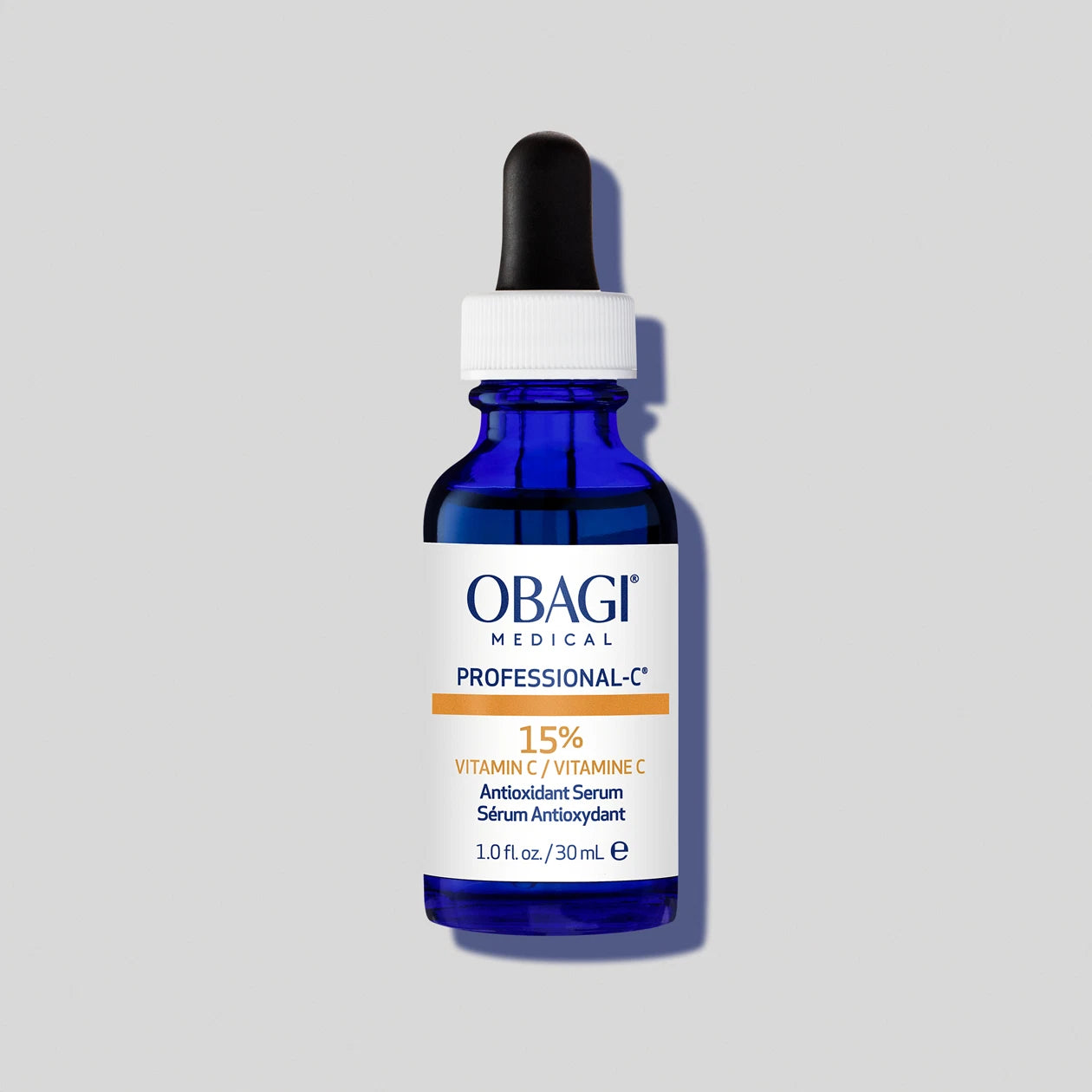
Professional-C 15%
A daily facial serum with 15% pure vitamin C, designed to brighten dull skin and help even skin tone. This is the lower-strength option of the two, recommended by Obagi for normal to combination skin.
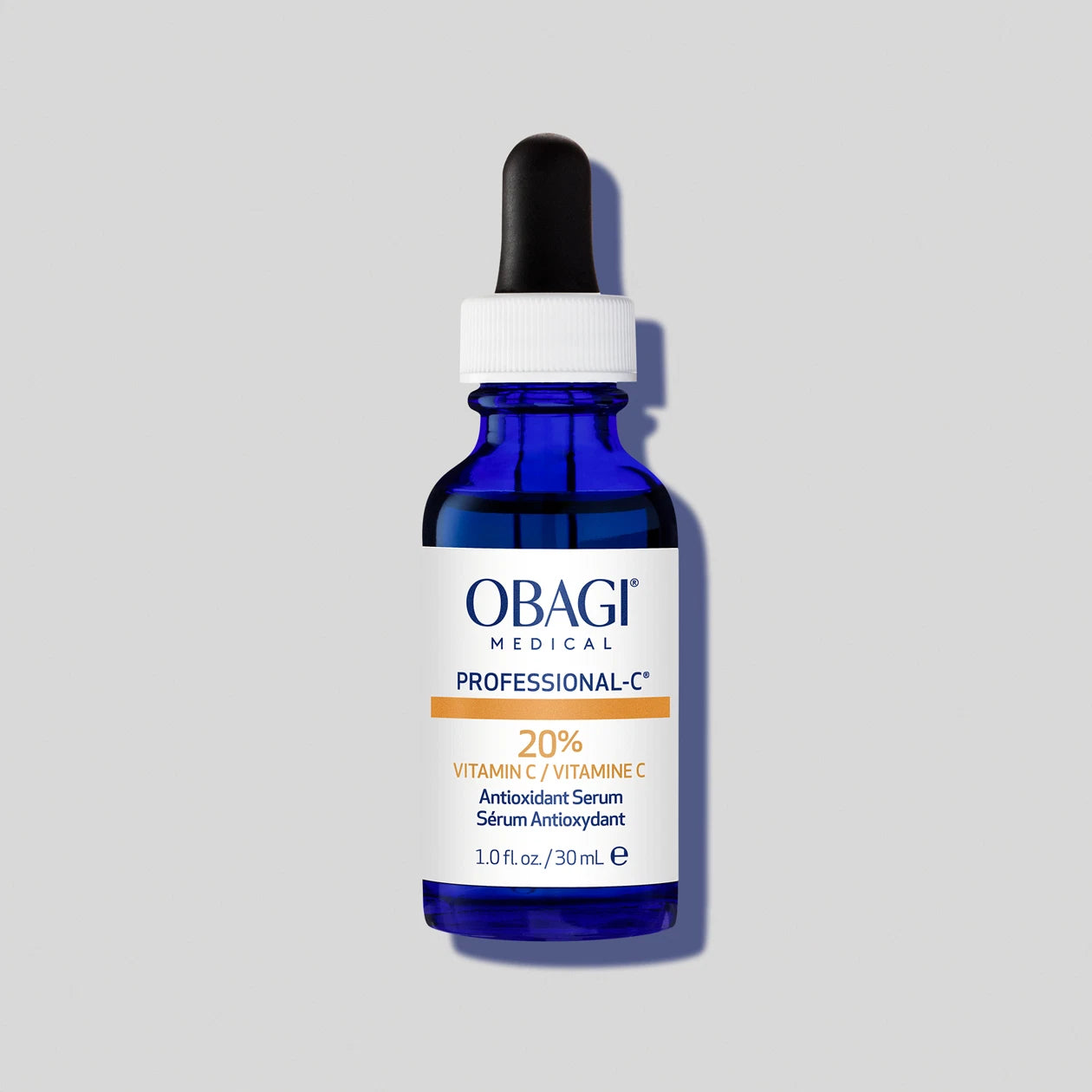
A daily facial serum with 20% pure vitamin C, designed to brighten dull skin and help even skin tone. Obagi recommends it for normal to oily skin; it also contains sodium hyaluronate, a form of hyaluronic acid.
Ethoxydiglycol, phenoxyethanol, calcium hydroxide and zinc chloride
Fragrance and denatured alcohol
Contains both
Contains both
Citrus extracts
Orange peel and grapefruit fruit
Orange peel and grapefruit fruit
Morning routine
5-7 drops after cleansing and toning, before moisturizer and SPF
Same manufacturer directions
After opening
Use within 3-6 months
Use within 3-6 months
Storage
Cap tightly; cool, dark and at or below 77 F / 25 C
Same storage instructions
Bottle compared
1.0 oz / 30 ml
1.0 oz / 30 ml
Has one been shown to work better?
No direct test of these two serums found
No direct test of these two serums found
Obagi's research on the 20% serum
Not compared in the research we reviewed
Does not prove it works better than 15%
No details match these filters.
Ingredients explained
Both contain vitamin C, fragrance and alcohol. The 20% formula also contains sodium hyaluronate and sorbitol.
14 of 14 ingredients shown
Obagi Professional-C15%
Obagi Professional-C20%
Ascorbic acid
Vitamin C antioxidant
The main vitamin C active: an antioxidant that helps defend skin against oxidative stress.
✓15% vitamin C✓20% vitamin C
Read more
L-ascorbic acid is pure vitamin C. You get a higher concentration in the 20% serum, but more does not automatically mean better results. How the serum is formulated also affects how much vitamin C reaches your skin. The study below looked at absorption, not which of these two Obagi serums works better.
A second form of vitamin C, which skin can convert into ascorbic acid.
✓Contains✓Contains
Read more
Both serums contain this vitamin C derivative as well as pure vitamin C. Research in human skin models shows it can be converted into ascorbic acid. Obagi does not say how much is in either serum; the 15% and 20% on the bottles refer to L-ascorbic acid.
Helps dissolve other ingredients and retain moisture in a formula.
✓Contains✓Contains
Read more
This ingredient does two jobs: it helps other ingredients dissolve and helps retain moisture. Both serums contain it, so moisture-supporting ingredients are not exclusive to the 20% version.
Provides a liquid base and dissolves ingredients that mix with water.
✓Contains✓Contains
Read more
Water carries ingredients that dissolve in it. Both serums use it as part of their base. A water-based formula is not necessarily more hydrating; that depends on the other ingredients too.
Denatured ethanol helps dissolve ingredients and evaporates readily.
✓Contains✓Contains
Read more
If you avoid denatured alcohol, neither serum is alcohol-free. Obagi does not give its concentration, so the ingredients alone cannot tell us which serum will feel more drying or comfortable.
Botanical extract; fragrance and skin conditioning
An orange-peel extract with cosmetic uses that include scent and skin conditioning.
✓Contains✓Contains
Read more
You will find it under the name Citrus aurantium dulcis peel extract. Both serums contain it. An orange extract is not the same thing as a measured dose of vitamin C; compare the L-ascorbic acid percentages for that.
An extract of grapefruit fruit pulp used for skin conditioning in cosmetics.
✓Contains✓Contains
Read more
You will find it under the name Citrus paradisi fruit extract. Both serums contain it, so it is not an extra you get by choosing 20%. Obagi does not say how much either formula contains.
If you prefer fragrance-free skincare, neither is the right match. Parfum is the label name for fragrance and can cover a mixture of scent ingredients, rather than just one substance.
A salt form of hyaluronic acid, the water-retaining ingredient used in skincare.
—Does not contain✓Contains
Read more
Found in 20%, not 15%. If you look for hyaluronic acid in your skincare, this is the ingredient to notice. Its amount is not disclosed, so its presence alone does not show that the 20% serum is more hydrating.
A water-attracting ingredient that helps a formula retain moisture.
—Does not contain✓Contains
Read more
A humectant is an ingredient that attracts and holds water. Only the 20% serum contains sorbitol. Alongside sodium hyaluronate, it is a useful reminder that 20% is a different formula, not simply the same serum with more vitamin C.
Helps dissolve or carry other ingredients in a usable formula.
—Does not contain✓Contains
Read more
Only the 20% serum contains it. Think of it as part of the carrier for other ingredients, rather than an extra skincare benefit. Its presence does not tell us that the 20% serum delivers vitamin C better.
Helps stop bacteria and other microbes growing in the product.
—Does not contain✓Contains
Read more
Only the 20% serum contains this preservative. That does not mean the 15% serum is unprotected: products can use different combinations of ingredients to stay preserved. One preservative is not enough to judge a whole formula's safety.
Can help control how acidic or alkaline a cosmetic formula is.
—Does not contain✓Contains
Read more
Only the 20% serum contains it. It can help adjust pH during formulation, but it does not tell you the finished serum's pH. We cannot use it to say which serum is more acidic.
Has several cosmetic uses, including astringent and antimicrobial functions.
—Does not contain✓Contains
Read more
Only the 20% serum contains it. Obagi does not say why it is included or in what amount. Do not read it as an acne-treatment or oil-control claim for the serum.
These 14 key ingredients are compared using Obagi's US ingredient lists. Formulas can change. Check the bottle before buying if you need to avoid a particular ingredient.
Choosing and using either serum
Which one suits my skin type?
Obagi recommends 15% for normal to combination skin and 20% for normal to oily skin, including combination skin. That is a starting point, not a promise that either will suit you. Both contain fragrance and denatured alcohol.
Is 20% worth switching to?
If you are happy with 15%, the bigger number alone is not a reason to switch. The 20% serum has more vitamin C and a different formula, but we found no direct test showing it works better than 15%. Compare current prices for the same 1 oz size before deciding.
Is there proof that 20% works better?
We found no direct test comparing these two serums. Obagi's research on 20% does not show that it beats 15%. We have not tested either product ourselves, and neither replaces sunscreen.
How do I use and store them?
Obagi directs 5-7 drops in the morning after cleansing and toning, followed by moisturizer and SPF. Avoid eyes, nose, mouth and lips. Stop and consult a doctor if tingling becomes severe. Cap tightly, keep cool and dark at or below 77 F / 25 C, and use within 3-6 months after opening.
Sources and method
Based on Obagi's US product information, checked 20 October 2026. This is not a hands-on product test. Photos are from Obagi; ingredient explanations link to their sources.